Empowerment: buzzword or real transformation?
Often used, rarely explained. Behind this key development term lies a deep, slow, and deeply human process.
 David Herreman
The word is everywhere. But what does it actually mean?
Empowerment. You hear it at conferences, in NGO reports, in government programs, on social media… It has become the magic word of modern humanitarian aid — the word that reassures, that projects a positive, inclusive, responsible image.
But what does it really mean? And more importantly, what does it produce on the ground, where the women and men we claim to "empower" actually live?
Between a valued concept and a fuzzy reality
Empowerment is generally defined as a process through which a person gains the power to act on their own life: access to education, resources, a voice in the community, financial independence.
But in practice, this word is often:
- used without being defined,
- repeated as a slogan, without real transformation,
- or diluted into projects that change nothing at their core.
Hand out food kits and say you're empowering people? Train without listening? Give without co-building? That is not empowerment. It is a useful gesture — sometimes a vital one — but it is not liberating.
Empowerment is not an action. It is a process.
To empower someone is not to carry them. It is to give them the means to carry themselves. And that takes time, relationship, trust, and listening.
It is a transformation that is both inner and outer:
- The person gains skills, but also a vision of their own worth.
- They move from waiting to acting.
- They stop merely surviving and begin to choose, decide, and build.
Above all, empowerment cannot be decreed. You do not "give" autonomy like a possession — you create the conditions for it to emerge.
What we see in the field
At the AWAKEN DESTINY foundation, we walk alongside women, widows, young people without resources, and displaced families — and if there is one thing we learn every day, it is that empowerment rarely begins with big projects. It often begins with small things.
It might start with a few groceries laid out on a market table, a phone used to connect and generate income, a lesson taught with care to a neighborhood child, or simply an encouraging word at the right moment.
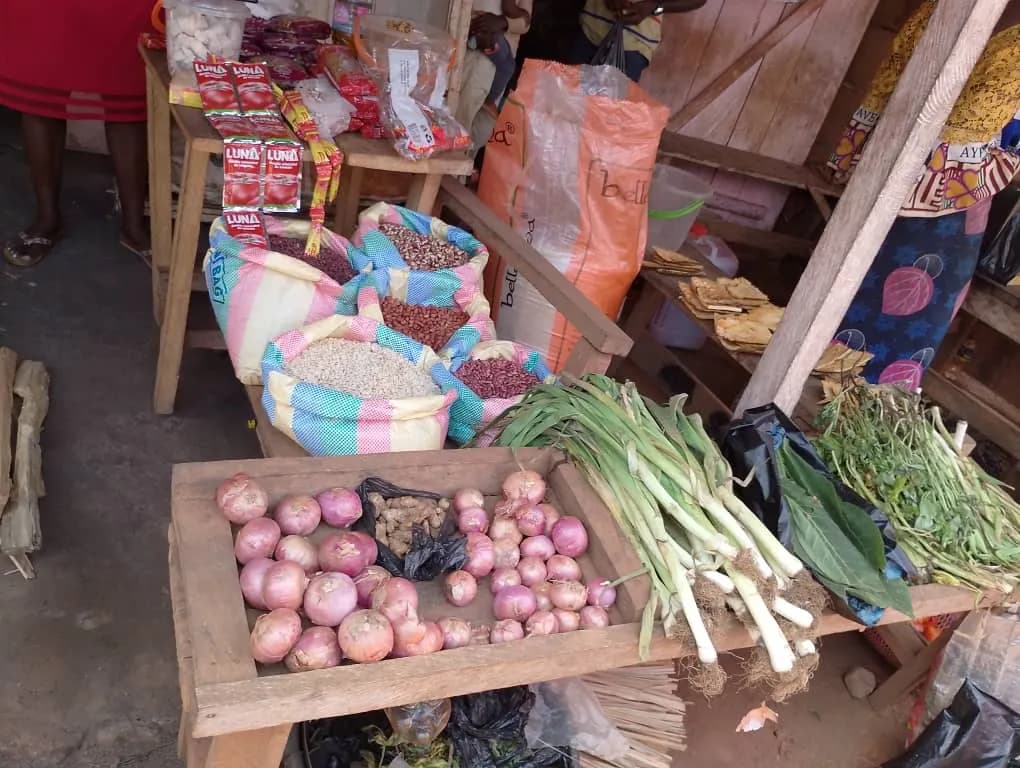
There, precisely, something clicks. The person is not simply receiving help: they reconnect with their capacity to act.
And that small movement — almost invisible — becomes the starting point of real change: an income, a decision, a claim of self-worth. It is a new vision of one's place in the world.
What empowerment is not
It is not:
- a synonym for traditional humanitarian aid,
- a word slipped into a report to look good,
- a goal disconnected from local context.
It is not linear, uniform, or always measurable. And above all, it cannot exist without the active participation of the person concerned.
What if we changed the way we act?
Empowering should not be an office slogan, but a compass for the field. That means:
- listening before acting,
- co-building solutions,
- making room, restoring the power to act (and sometimes to fail).
And it requires humility and consistency, because to empower is to believe in the other, even when they still doubt themselves.
One word, a thousand possibilities
Empowerment, when thoughtfully pursued and genuinely lived, can transform an entire life — even a whole community, across generations. It is slow, fragile, but powerful.
In a world where aid is often top-down, loud, and short-lived, empowerment is a quiet but lasting approach.
Support our work on the ground
Every donation equips concrete projects — essential support and self-reliance — in Cameroon.
Donate